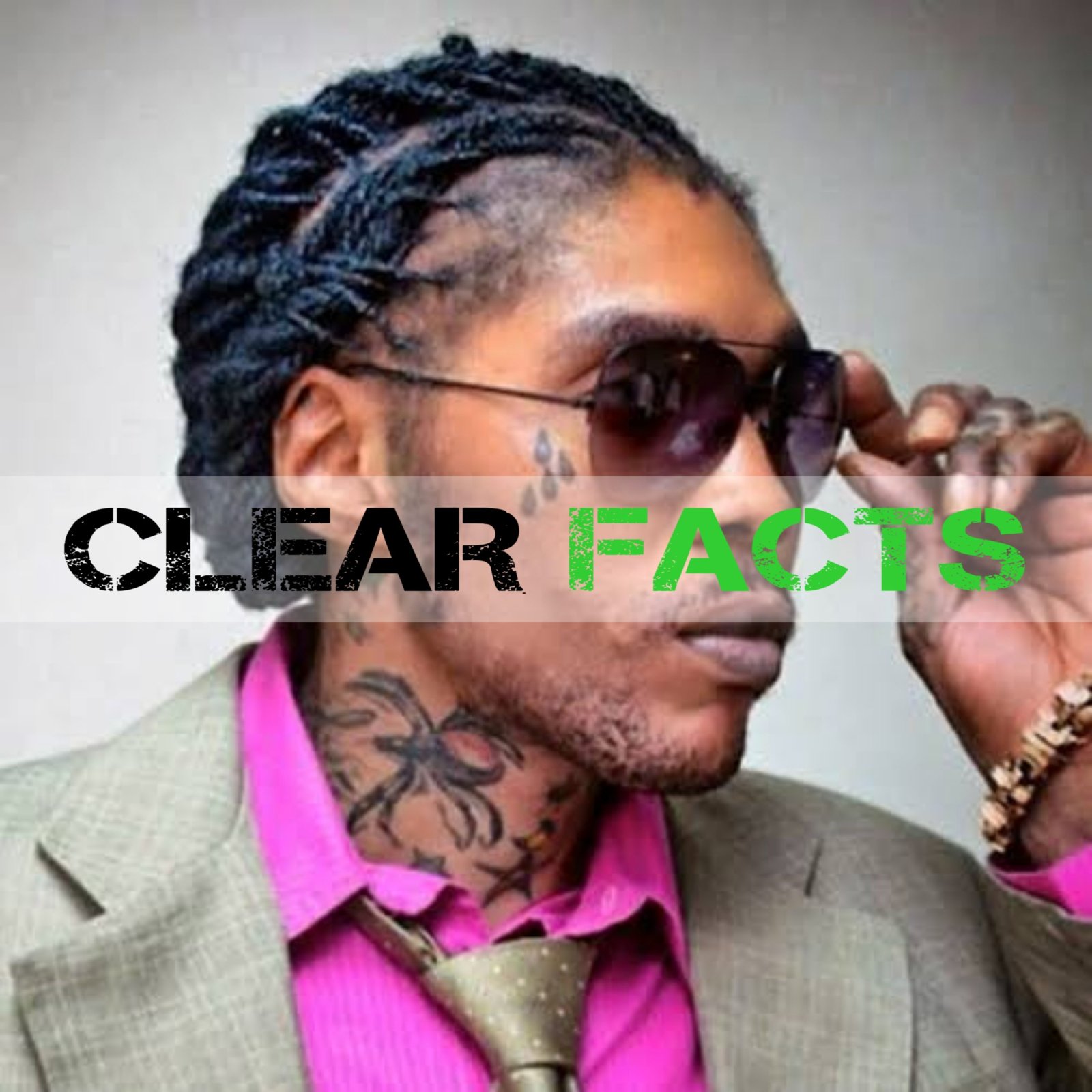

Adidja Azim Palmer, known worldwide as Vybz Kartel, was born on January 7, 1976, in Kingston, Jamaica. He grew up in Waterford, Portmore, where his love for music began at a young age. He attended Calabar High School but later transferred to Tutorial College. During his school years, he developed a passion for writing lyrics and performing, which set the foundation for his career in dancehall music.
He started recording in the early 1990s under the name Adi Banton before adopting the stage name Vybz Kartel. His breakthrough came with songs like “Love Fat Woman” and “Gal Clown,” which introduced him to the Jamaican music scene. He gained fame in the 2000s with hits such as “Romping Shop,” “Clarks,” and “Dancehall Hero.” His unique style and powerful lyrics made him one of the most influential dancehall artists of his generation.
Vybz Kartel worked with international stars including Rihanna, Jay-Z, and Major Lazer, which expanded his reach beyond Jamaica. He released several albums, including Up 2 Di Time, More Up 2 Di Time, and Pon Di Gaza 2.0. His music shaped dancehall culture and influenced younger artists across the Caribbean and beyond.
He also ventured into business, launching Street Vybz Rum and clothing lines that reflected his brand. His entrepreneurial spirit showed his ability to connect music with lifestyle and fashion.
Kartel’s career was marked by both success and controversy. In 2014, he was convicted of murder and sentenced to life imprisonment. Despite being in prison, he continued to record and release music, proving his resilience and dedication to his craft. His songs from prison kept him relevant and maintained his influence in the dancehall industry.
He is a father of several children and remains a central figure in Jamaican culture. His achievements include shaping modern dancehall, popularizing Jamaican slang and fashion, and building a loyal fan base worldwide. His success is measured not only by his wealth but also by his lasting impact on music and culture.
At fifty years old, Vybz Kartel continues to live and work from prison in Jamaica. His legacy as a dancehall icon remains strong, and his journey reflects both the heights of fame and the challenges of controversy. His story is one of talent, ambition, and influence that continues to inspire and divide opinions across the world.
Vybz Kartel Foundations and Formative Heritage
The origins of the man who would eventually be known as the “Worl’ Boss” are rooted in the Victoria Jubilee Hospital in Kingston, Jamaica. Growing up in the Waterford district of Portmore, Vybz Kartel was one of six children in a household that fostered an early appreciation for diverse musical genres. His upbringing in this coastal community exposed him to the vibrant sound system culture that defines Jamaican social life. During his youth, he spent countless hours observing local deejays and studying the lyrical delivery of icons like Papa San and Ninja Man.
His home life was grounded by the presence of his mother, Teresa Palmer, and his father, Norris Palmer. These family ties provided a sense of stability as he navigated the often-volatile environment of Portmore. He began writing his own verses by the age of eleven, demonstrating a precocious talent for rhyme and social commentary. This period of his life was marked by a relentless drive to prove himself on the microphone at local talent shows and neighborhood events. The community of Waterford remains central to his identity, serving as the spiritual headquarters for the “Gaza” movement he would later lead.
Vybz Kartel Academic Journey and Scholarly Pursuits
The formal education of this lyrical genius began at local institutions before he moved on to more prominent secondary schools. Vybz Kartel initially attended Calabar High School in Kingston, an institution known for its strong academic and athletic traditions. However, his time there was cut short when he was expelled as a teenager, a setback that could have derailed a less determined individual. Recognizing the importance of a formal qualification, he enrolled in a tutorial technical school to complete his secondary studies.
He successfully earned his CXC certificates in subjects including English, History, and Geography, showcasing an intellectual depth that would later manifest in his complex lyrics. His instructors noted his particular strength in literature, a skill that translated directly into his ability to craft intricate metaphors and storytelling in his music. This academic background distinguishes him from many of his peers, as he often incorporates historical references and sophisticated linguistic structures into his dancehall compositions. His commitment to learning continued informally throughout his life, as he became a prolific reader and eventually an author of his own biographical works.
Vybz Kartel Early Professional Path and Artistic Beginnings
The first steps of this artist’s professional journey were taken under a different moniker long before he achieved global stardom. Vybz Kartel originally recorded music under the name Adi Banton, a choice that paid homage to his musical role model, Buju Banton. In 1993, he released his debut single titled “Love Fat Woman” for producer Alvin Reid’s One Heart label. This early period was defined by a search for a unique voice and a struggle to gain a foothold in the competitive Kingston music scene.
In the mid-1990s, he formed a group called “Vibes Cartel” with several friends, which eventually gave rise to his permanent stage name. After the group dissolved, he retained the name and began his ascent as a solo performer under the mentorship of dancehall veteran Bounty Killer. As a key member of the Alliance, he served as a prolific ghostwriter for other artists, a role that allowed him to sharpen his pen and learn the intricacies of the industry. His early singles, such as “Gal Clown,” showcased a wit and audacity that would soon make him the most talked-about artist in the Caribbean.
Vybz Kartel Rise to Global Stardom and Musical Evolution
The transition from a local favorite to an international phenomenon occurred during the mid-2000s as he began to redefine the sound of dancehall. Vybz Kartel shattered records with hits like “Romping Shop,” a provocative duet with Spice that crossed over into the Billboard charts. He followed this with anthems such as “Clarks” and “Dancehall Hero,” which became cultural movements in their own right. His ability to blend traditional dancehall rhythms with pop and hip-hop elements allowed him to collaborate with global superstars like Rihanna, Jay-Z, and Pharrell Williams.
His rise was fueled by his uncanny ability to capture the zeitgeist of the Jamaican ghetto while appealing to an international audience. He established the “Adidjahiem” and “Notnice” labels, which served as the launchpads for his Gaza Empire, a collective of artists that dominated the airwaves for over a decade. His productivity became legendary, as he released hundreds of songs annually, each accompanied by a new trend in fashion or slang. By the time he reached the peak of his commercial success, he was widely considered the most influential figure in Caribbean music, capable of moving both the charts and the streets with a single release.
Vybz Kartel Significant Contributions and Genre Influence
The impact of this artist on the music industry extends far beyond his personal chart success. Vybz Kartel is credited with modernizing dancehall by introducing a more melodic, Auto-Tune-heavy sound that has since been adopted by artists worldwide. His lyrical prowess earned him the title of “The Teacher,” as fans and critics alike marveled at his ability to discuss topics ranging from politics and social injustice to romance and partying. He has released over a dozen studio albums, including Up 2 Di Time, Pon Di Gaza 2.0, and King of the Dancehall, which set new standards for production quality in the genre.
In addition to his music, he has been a transformative figure in Jamaican fashion and branding. He popularized the use of “cake soap” and sparked national debates on skin lightening, proving that his influence reached into the very fabric of social identity. His mentorship has produced some of the biggest names in contemporary dancehall, including Popcaan and Spice, ensuring that his artistic DNA continues to thrive through new generations. His achievements were recognized with multiple EME Awards and Stone Love awards, solidifying his status as a permanent icon of the genre.
Vybz Kartel Professional Ventures and Brand Expansion
Beyond the recording studio, this artist has demonstrated a keen sense for business and lifestyle branding. Vybz Kartel successfully launched his own line of liquor, Street Vybz Rum, which became a staple in Jamaican nightlife before its production was interrupted. He followed this with a renewed spirit line in 2024 titled “Str8 Vybz,” featuring various blends named after his most popular songs. These ventures showcased his ability to translate his musical popularity into a tangible lifestyle brand that resonated with his core fan base.
His entrepreneurial spirit also led him into the fashion industry with his own line of clothing and accessories. He understood the power of his image and leveraged it to create products that his followers were eager to consume. His involvement in the “Gaza” branding transformed a neighborhood rivalry into a global movement with its own merchandise and iconography. These business successes proved that he was not just a performer but a savvy entrepreneur who understood the mechanics of the modern attention economy. Even while facing significant personal challenges, he maintained a presence in the market through his book The Voice of the Jamaican Ghetto, which became a best-seller in its category.
Vybz Kartel Private Sphere and Personal Relationships
The domestic life of the “World Boss” has been as closely watched by the public as his professional career. Vybz Kartel is a father to several children, most notably his sons Likkle Vybz and Likkle Addi, who have followed in his footsteps by entering the music industry. His relationship with Tanesha “Shorty” Johnson has been a central theme in his life and music, as she served as his long-term partner and the mother of several of his children. She also played a vital role in managing his business affairs during his absence, helping to preserve the Gaza legacy.
In recent years, his personal life took a new turn with his engagement to Sidem Öztürk, a relationship that has been featured in public interviews and social media. Despite the intense scrutiny of the media, he has maintained a fierce loyalty to his inner circle and his parents. His family remains the cornerstone of his support system, often appearing at court hearings and public events to show their solidarity. This network of personal ties has been essential in sustaining him through his various legal and health challenges, proving that behind the controversial public figure is a man deeply committed to his kin.
Vybz Kartel Legal Challenges and Judicial Proceedings
The career of this dancehall legend was significantly altered by a decade-long legal battle that captured the attention of the world. Vybz Kartel was arrested in 2011 on several charges, eventually leading to a 2014 conviction for the murder of Clive “Lizard” Williams. He was sentenced to life imprisonment with a lengthy minimum term before eligibility for parole. However, he maintained his innocence throughout the ordeal, launching a series of appeals that reached the highest court in the United Kingdom.
In a landmark decision in 2024, the Judicial Committee of the Privy Council overturned his conviction, citing juror misconduct during the original trial. Following this ruling, the Jamaican Court of Appeal decided against a retrial, leading to his historic release from prison on July 31, 2024. This legal victory was celebrated by thousands of fans who had campaigned for his freedom under the slogan “Free Worl’ Boss.” The case remains one of the most significant in Jamaican legal history, highlighting issues of judicial transparency and the handling of electronic evidence in modern trials.
Vybz Kartel Enduring Impact and Economic Success
The legacy of the Gaza leader is measured both by his cultural influence and his substantial financial achievements. Vybz Kartel has an estimated net worth in the millions, a fortune built through high-volume record sales, streaming royalties, and his various business entities. Despite his incarceration, his music continued to generate significant revenue, with his catalog often outperforming active artists. His ability to release albums while behind bars, such as To Tanesha and Of Dons & Divas, ensured that his brand remained relevant and profitable during his absence.
His success is ultimately reflected in the global spread of dancehall culture, which he helped export to the world stage. From the streets of Portmore to the clubs of London and Tokyo, his influence is inescapable. He has paved the way for a new era of independent artists who manage their own brands and distribution. As he navigates his renewed freedom, his impact on the genre is seen as foundational, with every new dancehall track owing some debt to the lyrical and rhythmic innovations he introduced. He remains a singular figure in music history, a man whose career has survived trials that would have silenced anyone else.
Vybz Kartel Age (Chronological Life Stages and Personal Growth Milestones)
Vybz Kartel was born on January 7, 1976. As of January 2026, the current Vybz Kartel age is 50 years. He celebrated his most recent milestone birthday at the beginning of this month.
Vybz Kartel Children (Parental Legacy and Next Generation Family Branches)
Vybz Kartel is the father of seven children. He shares three sons, Jaheim, Akheel Raheim, and Aiko, with his long-term partner Tanesha Johnson. He has four additional children, including a daughter named Adi’Anna Ashanti Palmer, with other women. Several of his sons have pursued careers in music under the stage names Likkle Vybz, Likkle Addi, and World Boss Jr.
Vybz Kartel Wife (Marital Bonds and Private Relationship Status Context)
Vybz Kartel is currently engaged to Sidem Öztürk. She is a social worker of Turkish descent who was based in London before moving to Jamaica. The couple announced their formal engagement in November 2024 following his release from prison. He was previously married to Stacy Elliott from 2006 until 2008. Tanesha “Shorty” Johnson is also recognized as his longtime common-law partner and the mother of three of his children.
Vybz Kartel Tribe (Cultural Ancestry and Ethnic Heritage Background Roots)
Vybz Kartel is of Jamaican nationality. He has publicly stated that he possesses Maroon heritage through his great-grandfather, former Maroon Chief Colonel Sydney Peddie. He does not belong to a traditional African tribe, as his ethnic identity is rooted in the Afro-Jamaican community. His ancestral lineage is specifically linked to the Accompong Town Maroons in Jamaica.
Vybz Kartel Profile Table (Essential Data Summary and Key Personal Attributes)

| Profile | Information |
| Vybz Kartel career | Dancehall Artist, Songwriter, and Entrepreneur |
| Vybz Kartel real name | Adidja Azim Palmer |
| Vybz Kartel age | 50 years (as of 2026) |
| Vybz Kartel date of birth | January 7, 1976 |
| Vybz Kartel net worth | Estimated between $1 million and $2 million |
| Vybz Kartel wife / spouse | Sidem Öztürk (Fiancée); Stacy Elliott (m. 2006–2008) |
| Vybz Kartel children | 7 |
| Vybz Kartel parents | Norris Palmer and Teresa Palmer |
| Vybz Kartel religion | Christianity |
| Vybz Kartel state of origin | Kingston, Jamaica |
| Vybz Kartel alma mater | Calabar High School, Tutorial College |
| Vybz Kartel education | High School Graduate (CXC Certifications) |
| Vybz Kartel nationality | Jamaican |
Leave a Reply