

Siviwe Gwarube was born on July 14, 1989, in KwaMdingi near King William’s Town in South Africa. She was raised by her grandmother, who was a teacher and instilled in her the importance of education and service. She attended Kingsridge High School for Girls and later studied Law, Politics, and Philosophy at Rhodes University. She also completed an Honours degree in Political Science at the University of the Western Cape, which prepared her for a career in public service and leadership.
She began her professional journey as a parliamentary researcher and communications officer, where she gained experience in policy and governance. Her skills in communication and strategy helped her rise quickly within the Democratic Alliance. In May 2019, she was elected as a Member of the National Assembly. She served as Shadow Minister of Health, where she focused on healthcare reforms. She later became the National Spokesperson of the Democratic Alliance and then Deputy Chief Whip of the Official Opposition. In August 2022, she was appointed Chief Whip of the Official Opposition, a role she held until June 2024.
Her achievements include strengthening the party’s communication strategy, leading parliamentary debates, and advocating for better healthcare systems. In July 2024, she was appointed Minister of Basic Education, succeeding Angie Motshekga. This appointment marked a significant milestone in her career and placed her at the center of shaping education policy in South Africa.
Siviwe Gwarube works in Pretoria, where the national government is based. She is known for her strong debating skills and clear communication style. Her success is measured by her rapid rise in politics, her leadership roles, and her influence in shaping national policies. At thirty-six years old, she is regarded as one of the rising stars in South African politics, with a future that promises continued impact in governance and education.
Siviwe Gwarube Formative Years and Roots in KwaMdingi
Siviwe Gwarube spent her early years in the village of KwaMdingi, located near King William’s Town in the Eastern Cape. Her upbringing was significantly influenced by her grandmother, who played a central role in raising her and instilling the values of discipline and resilience. Growing up in a rural setting provided her with a firsthand perspective on the social and economic challenges facing many South Africans. This background often anchors her current political discourse, as she frequently references her roots when discussing community service and the importance of stable family structures. Her childhood in the Eastern Cape served as the initial backdrop for her interest in public affairs. The environment of her youth was one where community ties were strong, yet resources were often limited. These early experiences in KwaMdingi are a vital part of her identity, shaping her worldview long before she entered the national political stage. She credits this period of her life with providing the internal fortitude necessary to navigate the complexities of South African public office.
Siviwe Gwarube Academic Journey and University Foundations
Siviwe Gwarube began her formal education at local institutions, eventually attending Kingsridge High School for Girls in King William’s Town. Following her secondary schooling, she moved to the Eastern Cape’s academic hub to attend Rhodes University. There, she completed a Bachelor of Arts degree with a focus on Law, Politics, and Philosophy, a combination that provided a robust theoretical framework for her later work in governance. Seeking further specialization, she enrolled at the University of the Western Cape, where she earned an Honours degree in Political Science. Her academic pursuits did not end with her entry into the professional world; she is currently pursuing a Master’s Degree in Public Policy at the University of Cape Town. This ongoing commitment to higher learning reflects her belief in evidence-based policymaking and the need for technical expertise in leadership. Her time at these various universities allowed her to develop a deep understanding of South African legislative processes and political theory. These qualifications have been instrumental in her rapid ascent through the ranks of the official opposition and her eventual transition into the national executive.
Siviwe Gwarube Initial Professional Path in Political Communication
Siviwe Gwarube launched her career in 2012 within the sphere of political communications, serving as a professional staff member. Her first major role was as a spokesperson for Lindiwe Mazibuko, who was then the parliamentary leader of the Democratic Alliance. This experience at the heart of Parliament allowed her to master the art of strategic messaging and media relations. Following this, she transitioned to the Western Cape Provincial Government, where she took on significant administrative responsibilities. She served as the spokesperson and eventually the Head of Ministry for the Department of Health in the province under Nomafrench Mbombo. These roles provided her with a dual perspective on governance, combining high-level communication strategy with the practicalities of departmental management. Before seeking elected office, she returned to the party structure as the Executive Director of Communications for the DA. Her early professional life was defined by her ability to translate complex policy issues into accessible public narratives. This background as a strategist and researcher ensured she was well-prepared for the rigors of parliamentary oversight and executive responsibility.
Siviwe Gwarube Rapid Ascent Within the Democratic Alliance
Siviwe Gwarube made her transition from a staff member to a public representative in May 2019 when she was sworn in as a Member of the National Assembly. Her rise within the Democratic Alliance caucus was remarkably swift, driven by her performance in various oversight roles. She first distinguished herself as the Shadow Minister of Health, a position she held from 2019 to 2022. During this time, she became a prominent voice during the COVID-19 pandemic and a vocal critic of the National Health Insurance legislation. Her leadership qualities were further recognized when she was elected as the National Spokesperson for the party in 2020. By December 2021, she was appointed Deputy Chief Whip of the Official Opposition, and less than a year later, in August 2022, she became the Chief Whip. In this capacity, she was responsible for maintaining caucus discipline and managing the party’s legislative agenda. Her tenure as Chief Whip solidified her reputation as a level-headed and mature leader, eventually leading to her appointment as the Minister of Basic Education in July 2024.
Siviwe Gwarube Legislative Impact and Ministerial Milestones
Siviwe Gwarube has achieved several notable milestones since entering the legislative arm of government. As Shadow Minister of Health, she was a fierce advocate for transparency and accountability, particularly during the national health crisis. One of her significant legislative contributions included tabling amendments to the rules of the National Assembly aimed at strengthening executive oversight and combating corruption. She also introduced legislation focused on stabilizing coalition governments at all levels of the South African state. Her biggest achievement to date came in July 2024, when she was appointed as the Minister of Basic Education in the Government of National Unity. In this role, she succeeded the long-serving Angie Motshekga and became one of the youngest cabinet ministers in the country’s history. Since taking office, she has focused on five strategic pillars, including early childhood development and foundational literacy. Her efforts to expand mother-tongue education and the successful placement of 200,000 young people through employment initiatives are frequently cited as early successes of her ministerial tenure.
Siviwe Gwarube Public Persona and Debating Prowess
Siviwe Gwarube is widely regarded as one of the most effective communicators and debaters in the South African Parliament. Her presence in the National Assembly is marked by a clear, articulate speaking style that often cuts through the noise of partisan politics. She is seen as a key figure representing the younger generation of leaders within the Democratic Alliance and the broader political landscape. Her ability to remain level-headed during high-stakes parliamentary sessions has earned her respect across the political spectrum. Beyond the halls of government, she maintains a modern and accessible public persona, frequently engaging with citizens through social media platforms. This transparency has made her a relatable figure for many young South Africans who see her as a model for purposeful leadership. Her influence is not limited to her party; as a cabinet minister in a coalition government, she must navigate a complex web of interests, a task she performs with noted agility. Her reputation as a rising star is built on this combination of intellectual depth and communicative flair.
Siviwe Gwarube Private Life and Public Engagement
Siviwe Gwarube manages to maintain a clear boundary between her high-profile political career and her personal life. While she is very active on social media, her posts often focus on her professional duties, community visits, and advocacy for education. She keeps her specific family details away from the public eye, focusing instead on the values her grandmother instilled in her. Her life in South Africa is a balance of demanding ministerial responsibilities and a commitment to maintaining her authenticity. She has spoken candidly in interviews about the mental toll of public leadership, emphasizing the importance of staying grounded. Her public engagement is often centered on empowering young women and girls, a cause she has championed since her early days in the DA Students Organization. This focus on mentorship and gender equity is a recurring theme in her personal advocacy. By choosing to lead with purpose and transparency, she has managed to build a public profile that is both professional and approachable, even as she protects her private sphere.
Siviwe Gwarube Financial Status and Professional Standing
Siviwe Gwarube earns her income primarily through her role as a high-ranking public official. As a Member of Parliament and the Minister of Basic Education, her salary is determined by the independent commission that sets the remuneration for public office bearers. Her financial success is a reflection of her rapid progression from a parliamentary researcher to a cabinet-level executive. While she has become a person of significant influence and means, her financial disclosures in the Register of Members’ Interests show a modest list of gifts and sponsorships, often involving small tokens of appreciation from schools and international organizations. Her net worth is typically estimated in the millions of South African rand, consistent with the salary scales for national ministers. However, she often frames her success not through personal wealth, but through the tangible delivery of services in her portfolio. Her professional standing is built on her reputation for fiscal discipline and her focus on redirecting resources toward foundational learning and infrastructure development within the education sector.
Siviwe Gwarube Policy Vision and Future Trajectory
Siviwe Gwarube is positioned as a pivotal figure in the future of South African governance. Her legacy is currently being forged through her “Pivot to Foundation” strategy, which seeks to transform the country’s basic education system by focusing on the earliest years of schooling. She has set ambitious targets for the registration of thousands of early childhood development centers, aiming for universal access by 2030. Her future path is likely to see her take on even greater roles within her party and the national government, given her track record of handling high-pressure assignments. Many political analysts view her as a potential future leader of the Democratic Alliance, noting her ability to bridge the gap between different constituencies. As she continues to implement the Basic Education Laws Amendment Act and navigate the challenges of a coalition cabinet, her trajectory remains upward. Her long-term impact will be measured by how well she stabilizes the education pipeline, ensuring that more learners transition successfully into post-school opportunities and the workforce.
Siviwe Gwarube Age (Chronological Progression and Life Stage Overview)
Siviwe Gwarube was born on 14 July 1989. Following her most recent birthday, the current Siviwe Gwarube age is 36 years.
Siviwe Gwarube Salary (Public Service Compensation and Professional Remuneration Tiers)
Siviwe Gwarube receives a total annual remuneration package of approximately R2,800,225 in her capacity as a National Minister. This figure includes a basic pensionable salary component alongside various flexible allowances designated for public office bearers. Her earnings are determined by the Independent Commission for the Remuneration of Public Office Bearers and were recently adjusted in the 2025/2026 financial year gazette.
Siviwe Gwarube Contact Details (Official Communication Channels and Representative Outreach)
Siviwe Gwarube can be contacted via her official departmental email at Minister@dbe.gov.za or her parliamentary address at sgwarube@parliament.gov.za. Her ministerial office in Pretoria is reachable by telephone at 012 357 3000, while the Cape Town office uses the number 021 465 7350. Physical inquiries may be directed to the Department of Basic Education located at 222 Struben Street, Pretoria.
Siviwe Gwarube Husband (Spousal Relations and Household Foundation Context)
Siviwe Gwarube has not publicly disclosed information regarding a husband or a marriage. In various interviews, she has highlighted being raised in a household led by her grandmother, who also chose not to marry. There are no official records or media reports confirming that she is currently wed.
Siviwe Gwarube Children (Parental Status and Family Unit Structural Overview)
Siviwe Gwarube has confirmed in public interviews that she does not have any children. She has frequently spoken about her upbringing in a home led by her grandmother to illustrate the impact of family structures on child development. There are no official reports or public records identifying any offspring belonging to the minister.
Siviwe Gwarube Profile Table (Consolidated Snapshot of Essential Biographical Attributes)
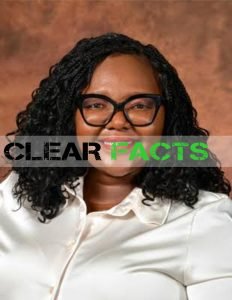
| Profile | Information |
| Siviwe Gwarube career | South African Minister of Basic Education and DA Politician |
| Siviwe Gwarube real name | Siviwe Gwarube |
| Siviwe Gwarube age | 36 years |
| Siviwe Gwarube date of birth | 14 July 1989 |
| Siviwe Gwarube net worth | Not known |
| Siviwe Gwarube wife / spouse | Not known |
| Siviwe Gwarube children | None |
| Siviwe Gwarube parents | Not known |
| Siviwe Gwarube religion | Not known |
| Siviwe Gwarube state of origin | Eastern Cape (Born in King William’s Town) |
| Siviwe Gwarube alma mater | University of the Western Cape and Rhodes University |
| Siviwe Gwarube education | BA in Law, Politics and Philosophy; Honours in Political Science |
| Siviwe Gwarube nationality | South African |
Leave a Reply